Wild pavements
In this extract from her book Wild Pavements, published today, urban naturalist Amanda Tuke shares the ‘sheer delight’ she finds in noticing nature in cities, from hunting sparrowhawks to pavement pioneers
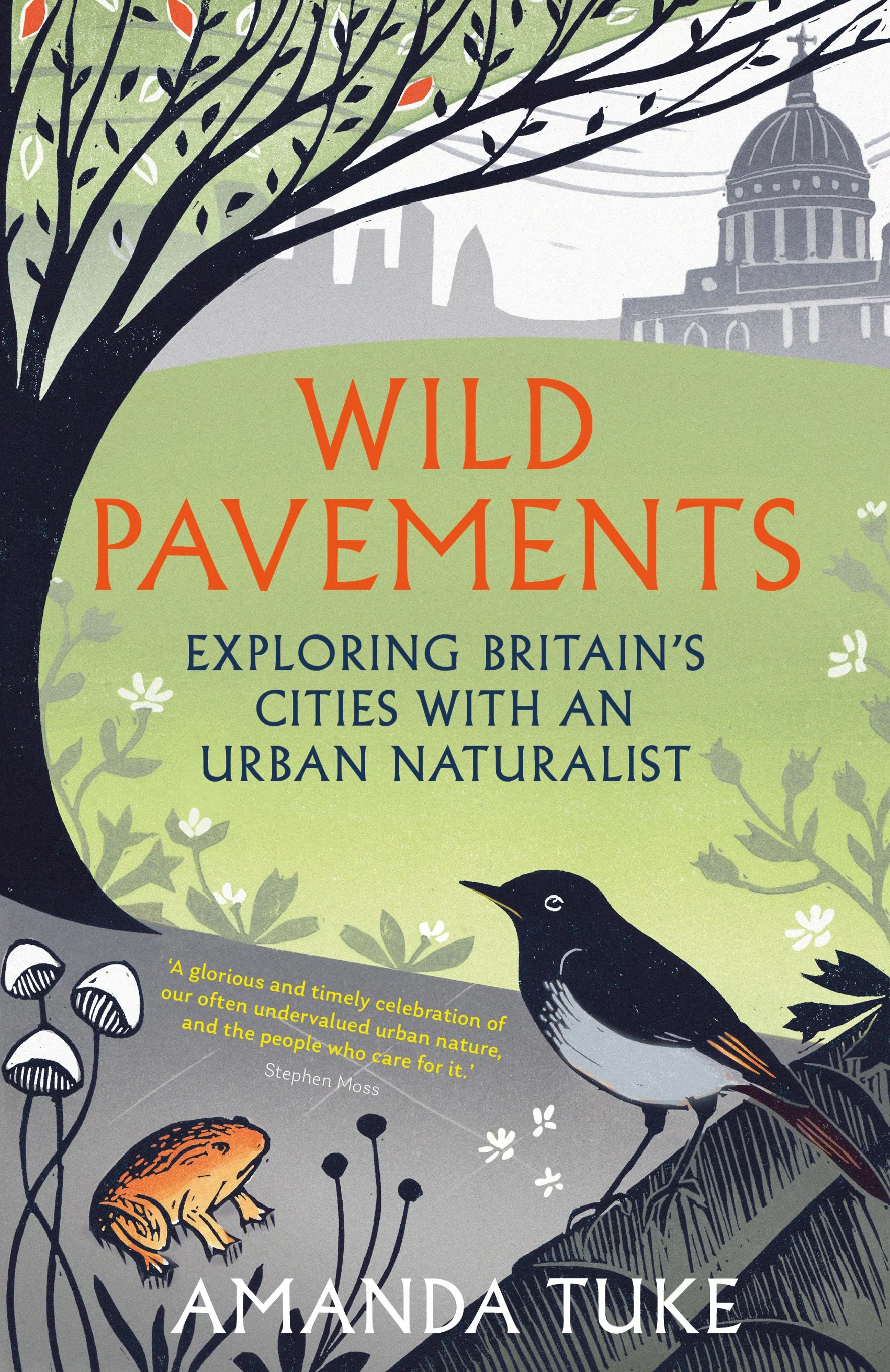
Naturalist: an expert in, or student of, natural history.
We’re walking along the Croydon Road in Southeast London on our way to collect the car from the service garage. It’s one of those breezy but sunny March mornings which hint that the change of season is almost upon us. The oncoming traffic is held at a red light and, even when the lights finally change, the lorries, vans and cars trundle forward, not much faster than we’re walking. It’s noisy, smelly, and frankly a bit depressing.
From nowhere, a sparrowhawk appears. It flies fast down the centre of the blocked road. Head held still, it folds its short, rounded wings to slip between the lorries and is no more than a metre behind a hapless great tit when the birds pass us. For this predator, supremely adapted to navigating the narrow gaps between trees, slow-moving lorries aren’t a problem. But it’s a sprinter, hunting with explosive bursts of energy, so it needs to catch its prey in seconds before tiring.
“Look! Look!” I say and track the pair with my outstretched finger, completely unable to squeeze out any useful words to describe what I’m pointing at. We watch as the birds drop just out of sight on the rough grass by a housing block. I weave across the road through the cars, but by the time I reach the spot, there’s nothing to be seen. If this was a natural history film, there’d be a few feathers floating to the ground. There are no feathers, but I still don’t rate the great tit’s chances of survival.
And the traffic trundles on. Still noisy, still smelly. Other than perhaps seeing a dotty middle-aged woman tearing across the road, the drivers seem oblivious to the nature drama which has just unfolded.
Experiences like seeing that urban sparrowhawk are special, but they needn’t be rare once you’re tuned in. It requires just a tiny adjustment in your focus as you navigate the city safely. Perhaps a twin-track internal dialogue? (Crikey, that car’s coming fast so I’d better step back away from the road. What made a call in the bush behind me? Sounded like a goldcrest. Bus, at last. Dancing insects in a sunny corner near the next bus stop. Winter gnats maybe? Remember to get off at the next stop. Why do I always find this plant growing round lamp-posts where dogs pee?) Come to terms with the fact that the natural world is the one we live in too, expect nature to be wherever you are, and you’ll start experiencing our cities completely differently.
For an urban naturalist, the simple act of walking down a city street is full of delightful distractions. I have to duck down this side street to see what’s growing along that pavement's edge. I’m compelled to stop for a 360-degree scan of the rooftops to locate the source of that bird call. And I can’t resist crossing the road and kneeling down to get a closer look at what’s buzzing around under that tree. Rambling along pavements and hunting for wildlife, I’m the opposite of Baudelaire’s detached, purposeless, and very definitely male ‘flâneur’ who idly observes city life of the human form. There’s always nature hunting to be done wherever I find myself. It’s fun hunting with other nature enthusiasts, but I’m quite happy on my own, although then prone to talking to myself. Most of the time it’s an internal dialogue as I think about what I’m looking at, listening to, smelling or touching, but every so often I discover I’ve said it out loud, with the sheer delight of what I’ve seen.
From the tiniest pavement plant and the hoverflies on flowers in street tree pits, to the pied wagtails patrolling our roof-tops and peregrine falcons scanning the city from the highest crane, there’s always something awe-inspiring to be found. Noticing urban nature changes the way you feel about your streets. Focusing on growth and beauty rather than grime and rubbish can lift your mood.
Wild Pavements: Exploring Britain’s Cities with an Urban Naturalist by Amanda Tuke is available to order here.