Where to watch wildlife
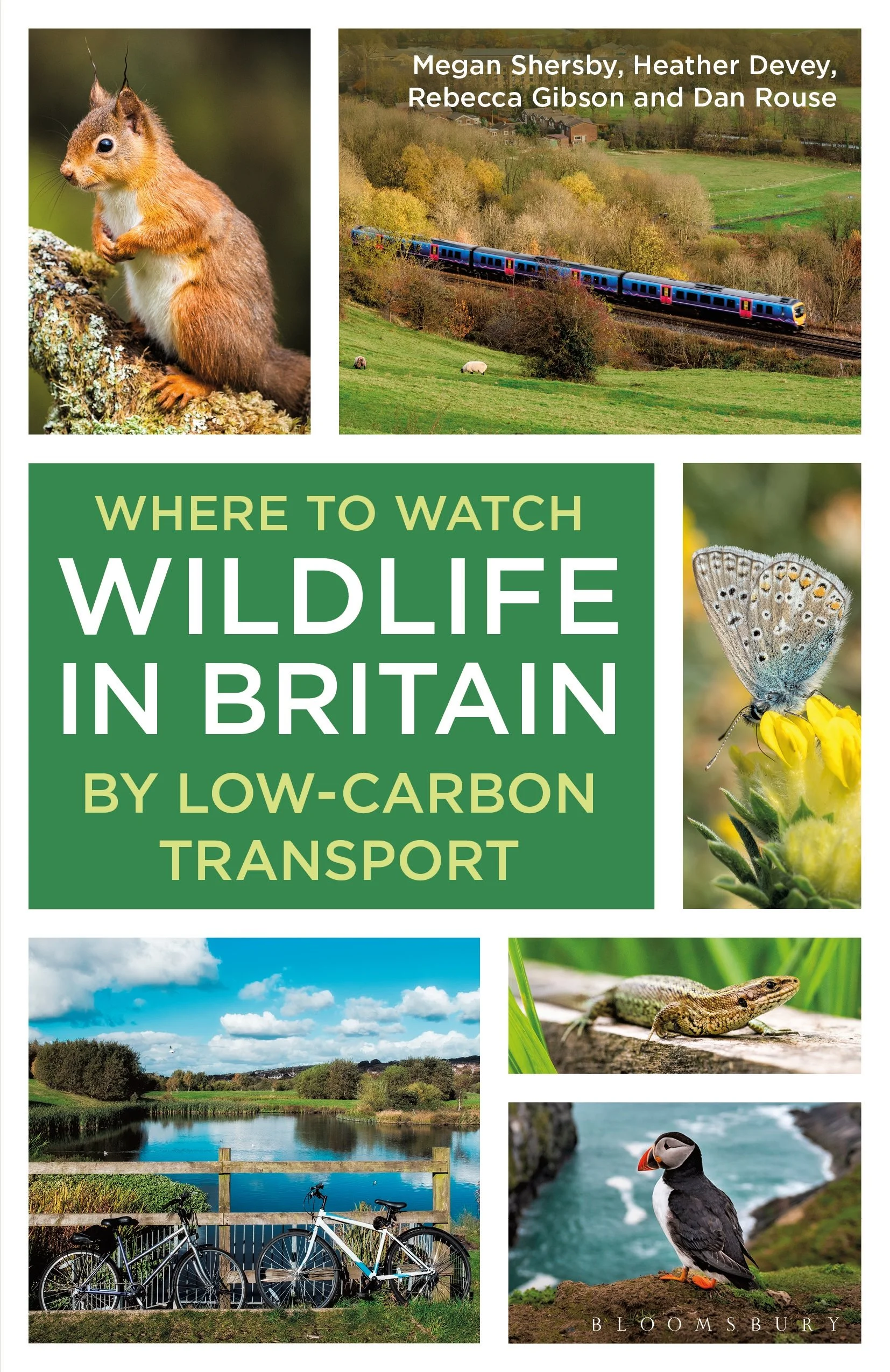
Travelling by car to see wildlife is becoming harder to justify, but this new book provides a solution. With over 100 sites in and around 20 urban hubs that can be reached by train, bus, bicycle or on foot, each entry includes directions, public transport options, access, photographs, and year-round recommendations for wildlife to spot. Below is an extract from the Dumfries hub in the Scotland section of the book, written by Rebecca Gibson
Dumfries
The market town of Dumfries lies close to the Solway Firth, an inlet dividing the Dumfries and Galloway council area from Cumbria. Within the town itself, a walk or cycle beside the River Nith may bring sightings of a kingfisher, grey heron or otter. When temperatures cool and days shorten into autumn, the honks of droves of geese arriving in Scotland to overwinter fill the air. Most commonly seen are pink-footed and greylag geese, but it is the large flocks of barnacle geese visiting RSPB Mersehead that give the reserve its internationally important status. At sunrise, these monochromatic birds fly inland from their nightly roost on the sandflats to forage in the fields. Many migratory ducks also arrive here, with wigeons being particularly numerous.
Just outside Dumfries at Lockerbie, you may share woodland clearings with red squirrels at Eskrigg Nature Reserve. At nearby Castle Loch, sprays of vibrant autumnal foliage are reflected in the water, while great crested grebes perform their courtship dances in spring. The broad sandy plains of Carsethorn and Southerness beaches are some of the best locations for wintering wading birds on the Solway Firth. Not far from here is Kirkconnell Flow, a special place with highly threatened ancient raised bog habitat.
Buses from Dumfries connect neighbouring settlements such as Lockerbie, Carsethorn and Southerness. Trains at Dumfries station arrive regularly from Carlisle and Glasgow.
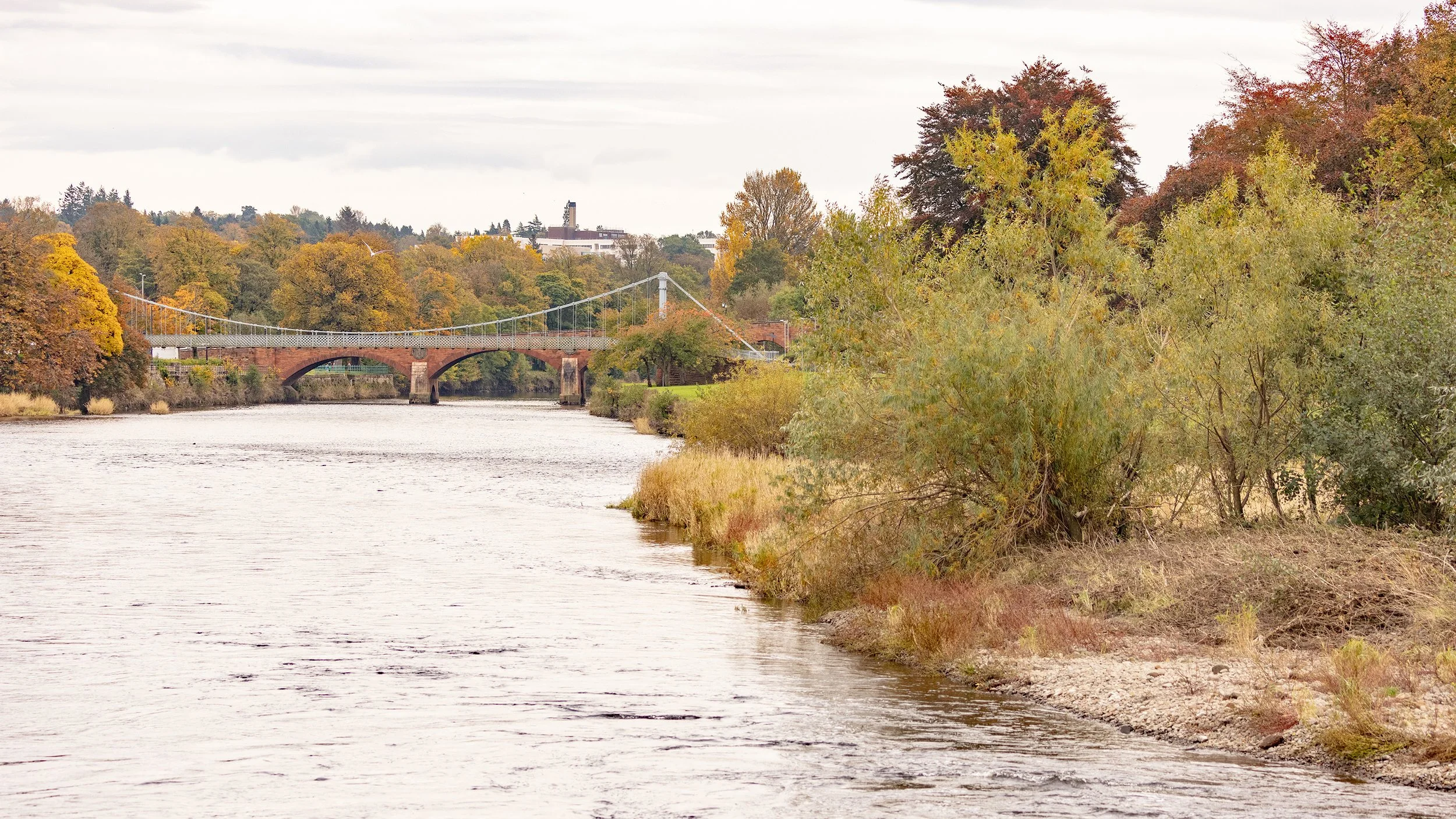
Devorgilla Bridge, Dumfries, with the ‘children’s bridge’ in the foreground
River Nith
White Sands, Dumfries DG1 2RS; OS Explorer Map 313; Grid ref NX969760; What3Words keyboards.echo.country (Devorgilla Bridge)
How to get there: The River Nith winds around the entire western side of the town of Dumfries, but the popular section at the White Sands car park is just 0.5 miles (0.8km) from the train station. Get there by heading southwest, following St Mary’s Street, English Street and Bank Street, until the water appears just beyond the A781.
Access and conditions: At White Sands, the pavement beside the road serves as a walk and cycle path for the river, following all-access tarmac at the water’s edge that also overlaps with National Cycle Route 7. Toilets are available in Dumfries.
For urban wildlife watching in the centre of Dumfries, all a visitor needs to do is amble along the River Nith. Stretching 70 miles (113km) from East Ayrshire to the Solway Firth, the Nith is Scotland’s seventh longest river.
A good place to start your explorations is a tumbling weir known as the Caul, located beside the White Sands car park. The Caul is overlooked by the pedestrianised Devorgilla Bridge, its stone arches casting a striking reflection on the water.
One of the first birds you’ll likely spot on the Caul is a grey heron standing with its feet submerged in the white water surging down the weir. Wintering goosanders and goldeneyes also dive for fish and crustaceans here. Dabbling mallards are easy spots, but treecreepers and wrens are more challenging as they forage in the avenue of scrub pressed against the stone wall lining the river. Look up at the right time and a kingfisher might be speeding by, its sharp, high-pitched call audible even above the rushing water. Grey wagtails flutter in and out of the waterlogged grass screening the sandy banks. Salmon leap up the Caul during October and November.
Perhaps surprisingly for such an urban stretch of river, otter sightings are frequent along the Nith. These typically elusive mustelids aren’t nearly as shy in Dumfries as they are elsewhere, and can sometimes be seen right by the path. If they’re not diving underwater for fish, they might be porpoising out of it with energetic curved leaps. When the river floods, they feed on washed-up eels, attracting the attention of nearby herons which perch on the wall above, hoping to snag the otters’ catch. Although they glance up at human spectators watching from the walkways, the otters here may forage confidently close, spinning in the shallows with a flick of the tail.
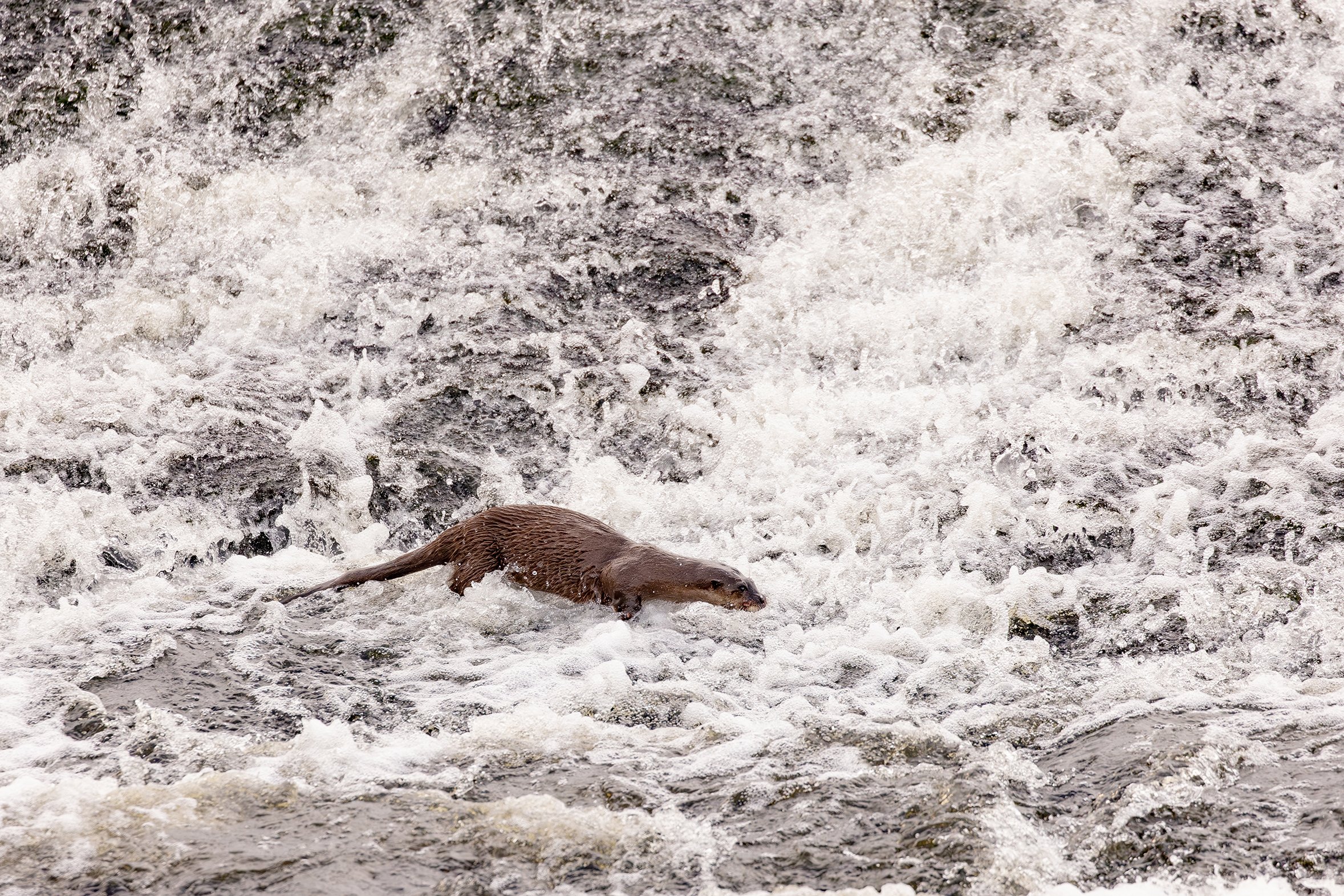
An otter on the Nith
Where to Watch Wildlife in Britain by Low-Carbon Transport by Megan Shersby, Heather Devey, Rebecca Gibson and Dan Rouse is out now, published by Bloomsbury. You can order a copy here.