Nature within
The natural world shapes our minds and bodies, and in his new book neurologist James Bashford puts forward a compelling argument for protecting biodiversity as a public health intervention. In this extract, he describes how moths came to be, for him, a gateway to nature connection
Nightly visitors in their droves
In the garden, I have seen tigers dressed in scarlet and ruby. I have witnessed leopards, elephants and mice, too. I have glimpsed antlers, ears and snouts among flashes of copper, crimson and blue. I have had pearls and emeralds laid out on carpets of various types. I have been visited by peacocks, swifts, magpies and the like. Old ladies and footmen have all trodden softly amid the poplars, toadflax and box. I have seen many varieties of pugs and hawks, and on one occasion, even a fluffy female fox.
Since April 2022, the deployment of ultraviolet bulbs at night has attracted over 250 new species to my small urban garden in Essex, UK, plus another 150 further afield. Both their colloquial and scientific names are as diverse as the colours, shapes and behaviours that identify them. Each species is finely attuned to the whims of its favoured season, and their numbers from night to night vary according to the prevailing winds and the intensity of moonshine. Yet they are largely shunned, or at best forgotten, by the many who perhaps fear, or at least misinterpret, their night-time proclivities
All the species I allude to are part of an ancient order of insects dating back 300 million years. They have seen the rise of the dinosaurs followed by the fall of the non-avian ones. They have clung on through mass deaths and meltdowns, only to flourish as the perfect accomplices for flowering plants and trees in the aftermath.
The diverse group of species I describe are the moths. But if, like me, you prefer a literal translation that exists among the romantic European languages, then you can also think of them as the butterflies of the night.
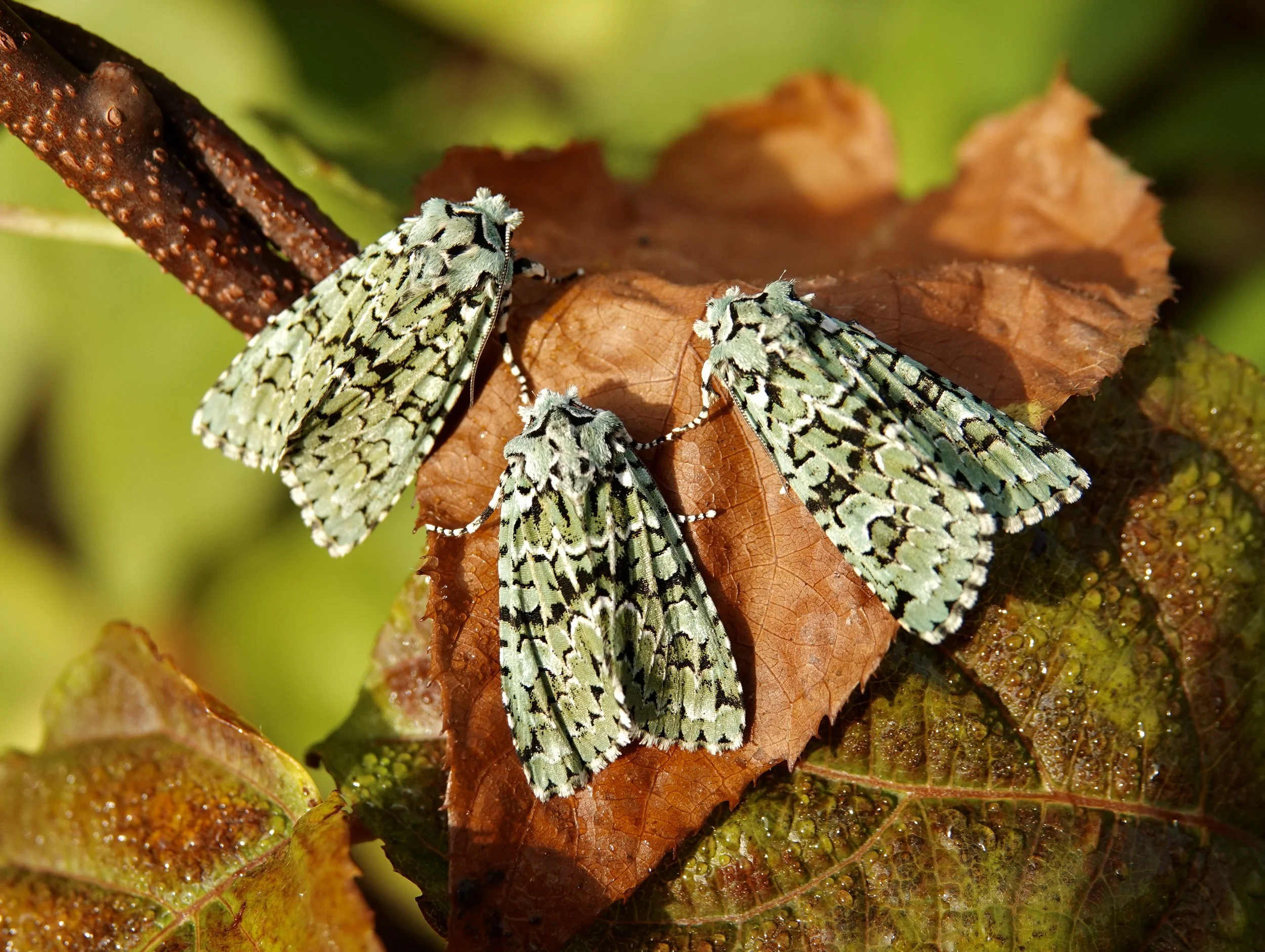
Three merveille du jour moths
Although the evolutionary branchpoint of butterflies from moths goes back about 100 million years, it is difficult to justify the favoured status that butterflies instinctively hold among humans today. Undoubtedly, this has more to do with our shared preference for the daytime than anything else. Because of this, butterflies are widely considered symbols of the bright, bold and beautiful, while moths have unjustly become icons of the dull, dark and dusty.
All told, there are at least 160,000 known species of moths and butterflies worldwide, with estimates of another few hundred thousand yet undiscovered. In terms of species numbers, moths outnumber butterflies by at least seven times globally, increasing to forty times in temperate climates like the UK. While you would be hard pushed to locate the smallest micromoths with the naked eye, only microscopic examination of lock-and-key genitalia distinguishes larger species that look identical otherwise. This degree of biodiversity, playing out on so many levels, is what truly staggers me. And that is without even mentioning the huge variety of caterpillars that give rise to the flying adult forms.
On numerous occasions I have been asked what drives my nascent interest in moths. Is it the remarkable complexity of their life cycles? Is it their mesmerising wing patterns? Is it the longevity of their evolutionary tale? Is it their intricate symbioses with plants and trees? Is it their surprising docility during the morning inspection? Or is it their almost universal accessibility wherever in the world you are?
While my answer often includes some variation of these qualities, there is also an element that is none of these things at all. Steadfast yet mysterious, there is something intangible that glues everything together, a connection that refuses to be pigeon-holed. Like many others before me, I have begun to appreciate moths as the perfect doorstep portal into the expanse, wonder and vitality of Nature.
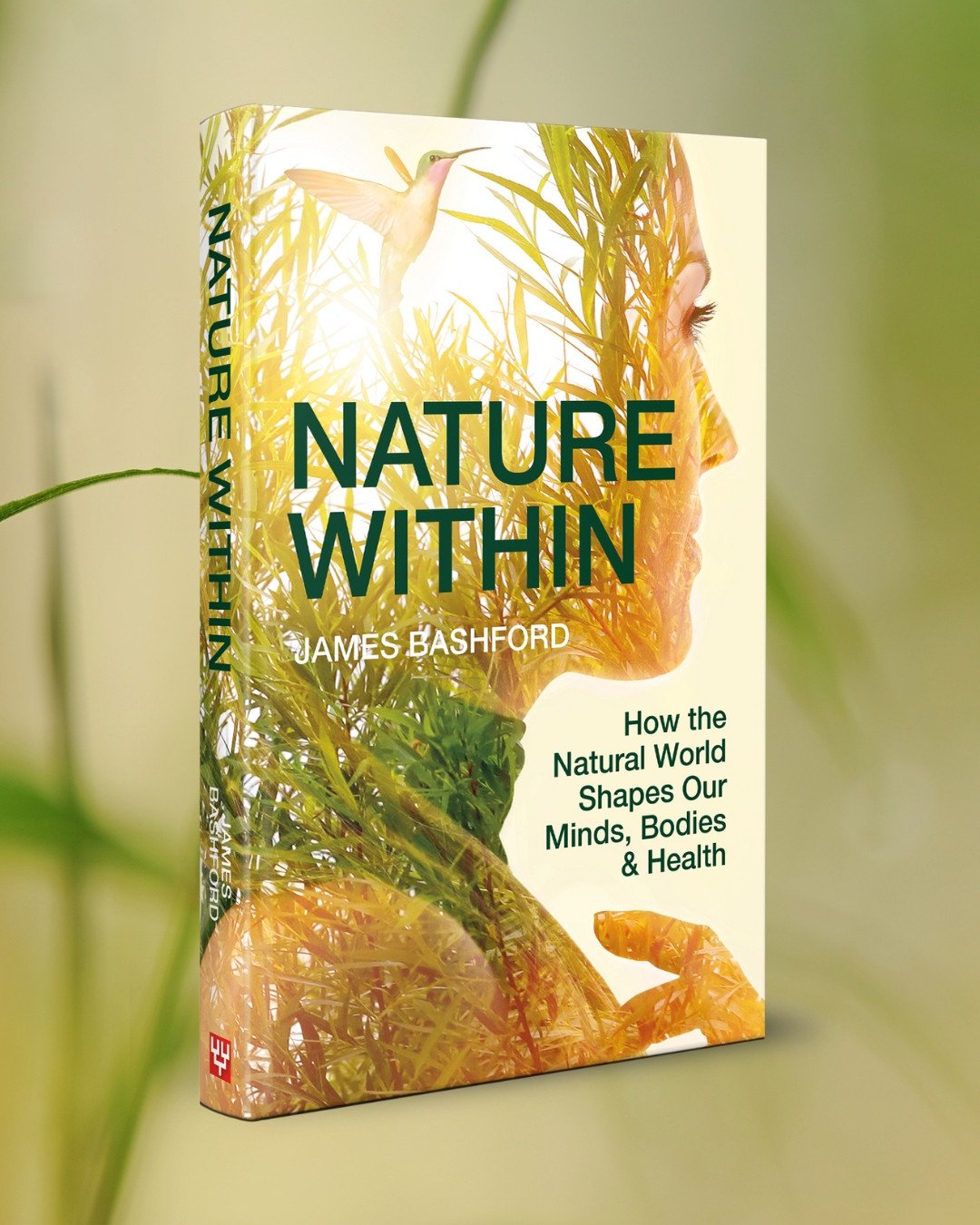
Nature Within: How the Natural World Shapes Our Minds, Bodies & Health by James Bashford is out now. Use the discount code below for 25% off.