Can I see some ID?
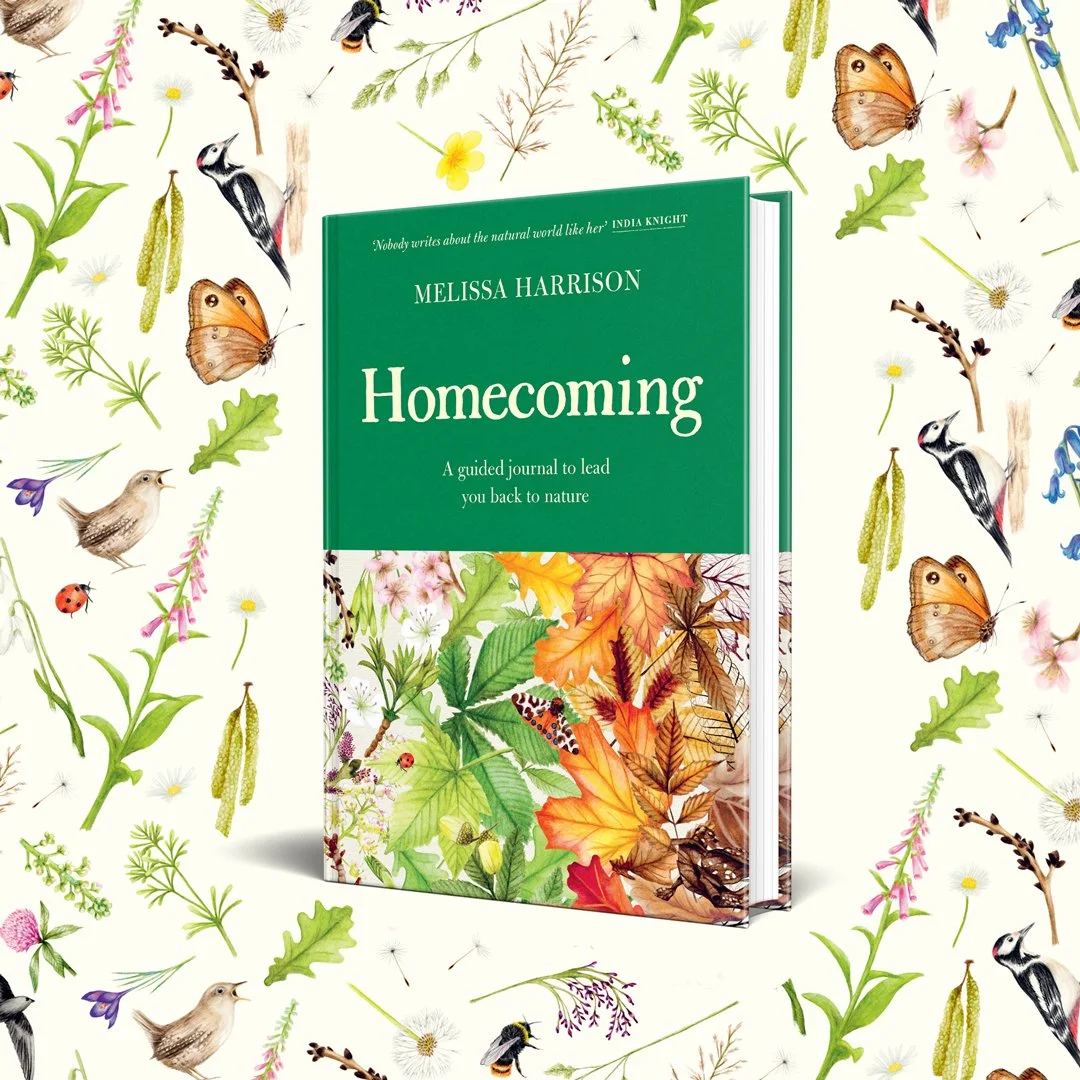
Have you ever found yourself thinking, ‘This year, I’m going to learn birdsong’, or ‘I’d like to be able to identify more trees and flowers’? In this extract from Homecoming: A Guided Journal to Lead You Back to Nature, Encounter’s founder Melissa Harrison discusses identification for beginners. Is it important? Where should you start? And what are the common pitfalls to avoid?
The first thing to say about identifying plants and animals is that you don’t have to bother with it if you don’t want to: it’s perfectly OK simply to appreciate the beauty of wildflowers or enjoy listening to birdsong without working out the correct names for everything. For some people, in fact, it can produce anxiety, or act as a barrier to pleasure, and if that’s you, listen to that instinct: it’s far more important that you connect imaginatively and emotionally with nature than that you learn what genus or species something is.
Me, I like to know the names: it feels like being introduced. I’m not someone who keeps a ‘Life List’ of the species I’ve recorded, though I know that brings others a great deal of satisfaction, but if I have a name for something, I can look it up to find out more about it: what it needs, how it behaves, whether it’s doing well or in trouble, and perhaps how I can help. It lends richness to the world when I can differentiate the things living in it; when, instead of there being some birds in my garden, I can tell you that there are, say, eight kinds I regularly see, and a couple more who pop in from time to time; when I can recognise most of the plants growing in my tiny strip of verge and know that there are more now than when I moved in; when I can find out why I see different insect species down by the river than live in the churchyard. The richer the natural world gets in my mind, due to telling one thing from another, the more gloriously its details ‘pop’ and the greater the joy I get from it all.
On a scale of 0 to 10, where 0 is a nature newbie and 10 is a proper expert, I’m probably about a 6, hoping to make 7 (I would have marked myself higher once, because I didn't realise how far beyond me the scale went). I’ve amassed a good library of identification books and do a lot of looking things up, and I learn as much as I can from generous experts willing to share their knowledge, but I’ve no formal training in this field. What I am, though, is an excellent noticer, and I’m curious, and although I forget some of the things I learn, some of it sticks. With each year that passes I add a little more knowledge to my store – and that’s how I know that you can, too.
At first, you’ll find it hard to see the difference between things, just as I did – even when it's pointed out. It takes time for your brain to get granular enough to tell apart the similarly sized and coloured buttercup from cinquefoil, or hear the difference between the two-note songs of a great tit and a chiffchaff. And this lack of granularity at the start is worth bearing in mind for two reasons: firstly, because it’ll change, so don’t be discouraged; and secondly, as a guard against premature certainty. When I first started learning about nature, I confidently misidentified almost everything left, right and centre, simply because I didn’t know how much I didn’t know. And because certainty kills off curiosity, that held me back from discovering more. When I spot something unfamiliar now, I try to hold my guesses lightly, and then I check it as thoroughly as I can in my reference books at home.
Trusted sources
I’ve mentioned books because, even in the digital era – perhaps especially in the digital era – they are important. The information in a reputable botany or ornithology ID book, or in one of the Field Studies Council’s excellent fold-out guides, will have been produced and rigorously checked by experts, and can be relied on; similarly, the information on websites such as Butterfly Conservation’s, or the RSPB’s. However, the terminology around species identification can seem opaque at first and you might need to put some time in to work out how to use the charts and keys; I’m very aware that this can be a barrier to the kind of instant answers we all crave, and which you’ll probably seek out.
But the fact is, some of the newer digital sources just aren’t reliable. I’ve found that species are routinely misidentified online on everything from social media and image sharing sites to reputable picture libraries. Identifications are made online without key information such as where something was seen, or at which time of year, and errors go uncorrected. These are often then multiplied unchecked from one source across several sites – and thus, the ID apps that scrape the internet for training data.
Even when asking real humans for help online, a complicating factor is people’s general helpfulness: everyone wants to suggest a good answer when someone asks what something is, but as I’ve already mentioned, many of us aren’t aware of how much we don’t know – for example, how many close mimics a flying insect has, or that a family of plants is ‘taxonomically intractable’ (i.e., a hot mess, even for botanists). Although I love chatting to other nature lovers online about what something might be, I’ve learned to take strangers’ well-meant ‘reckons’ with a large pinch of salt, unless I can be sure they really are an expert in the relevant field.
ID apps
All that being said, the digital realm is – let’s be honest – where most of us are going to go to get answers, not least because, like the Encounter app, it lives in our phones. And one of the ways in which we’re increasingly accessing information is via those identification apps I mentioned, or the image identification function that now comes built-in to some mobile operating systems. Smart ID functionality offers identification suggestions based on photos or sounds, and while some are absolutely brilliant – the free Merlin Bird ID app, for example – others, such as Visual Look Up on iOS, trained on Siri Knowledge and ‘similar pictures found online’ – leave a lot to be desired. My worry is we don’t always know enough to know when we’re being told the wrong thing, and that hinders our own learning processes as well as building in errors that then get baked into the system as we add more incorrect info to the pool of it circulating online.
The answer? Look at the data an app is trained on. The reason Merlin is so good at recognising birdsong is that it was built by a reputable educational organisation (the Cornell Lab of Ornithology) and its training data comes from expert birders: people using the eBird network around the world. The free German app Flora Incognita is also impressively reliable when it comes to recognising wildflowers; again, it’s a scientific research project with training data provided and continually updated by botanists, citizen scientists and researchers. Importantly, both apps take into account your location and the time of year in generating a result. In contrast to these complex scientific projects, there are commercial ID apps popping up daily, trained purely on web ‘reckons’ and with no greater goal than extracting a couple of quid from users whose knowledge they will thoroughly set back.
So, when you’re choosing a ‘smart’ identification app, read up about it on its website rather than just choosing the first one that pops up in your app store or whichever one bombards you with ads on Instagram. Go for one that’s built on a database of expert, frequently updated training data (Merlin comes with large data packs tailored for each region) and which uses your location to tailor its suggestions – I can’t tell you how many times Visual Look Up on my iPhone has confidently identified North American species when shown quite common UK plants.
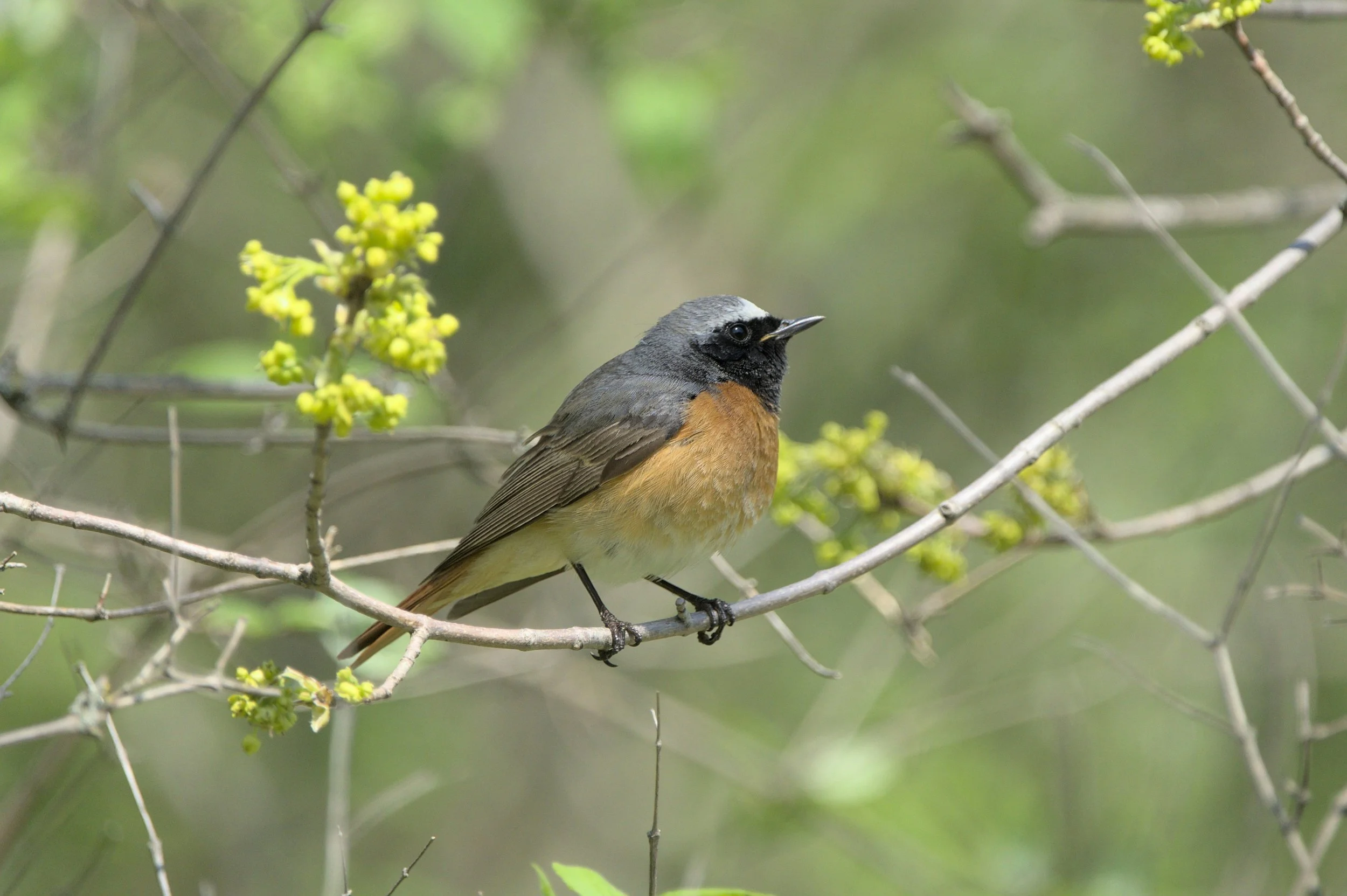
Most importantly, treat the answers your chosen app gives you as suggestions: even the mighty Merlin has blind spots (or deaf ears), confusing, for instance, the ‘hweet’ call of a chaffinch (extremely common) and that of a redstart (less so). Try always to get ‘eyes on’ a bird before believing in a call it has identified, and never add a species to a conservation or citizen science database without being 100 per cent sure. Your job, when you ask an app and it gives you an answer, is to investigate further – perhaps via a trusted website such as the British Trust for Ornithology, The Wildlife Trusts, or a book. Does the plant or creature even occur in the place in which you saw it? Are you likely to see or hear it at this time of year, or is it absent/in hibernation? How common is it, really? (Although we all want to see something unusual, the truth is that rarities are just that: rare).
I write all this knowing that the technological landscape is changing so fast that by the time you read this it might be irrelevant. That’s where books and scholarly publications have the edge, either by themselves or as the second stage after using a reputable identification app. Many can be bought second-hand for not much at all, especially as you don’t always have to have the very latest edition – my much-used copy of The Wild Flower Key by Francis Rose was last revised in 2006. While things like distribution and population size may change over time, and some areas, like gull identification, have been transformed by advances in science, in most cases the basic facts about what something looks and sounds like will still be correct whether the book you’re looking it up in is from three or thirty years ago.
Homecoming: A Guided Journal to Lead You Back to Nature is out now. You can start using it in any month and follow it around to where you began.