In this guest blog from PhD student Anna Lewis we find out how your species tags have been helping one researcher uncover the connections between common species and a connection to place
In ‘Instructions For Living a Life’, the American nature poet Mary Oliver writes:
“Pay attention.
Be astonished.
Tell about it.”
At this time of year it’s not hard to pay attention to the natural world, and the changing colours of autumn are ripe for astonishment: the fiery crabapple turning orange in my garden, the bright red rosehips I walk past on my way to the station, the chestnuts dropping piles of leaves which I kick my way through. “Tell[ing] about it” is perhaps harder, which is where Encounter can come in, as the data you record can then be useful to scientists. As a researcher I was grateful to Encounter for sharing some of your anonymised species tags, which demonstrate that the urge to share nature with others is alive and well.
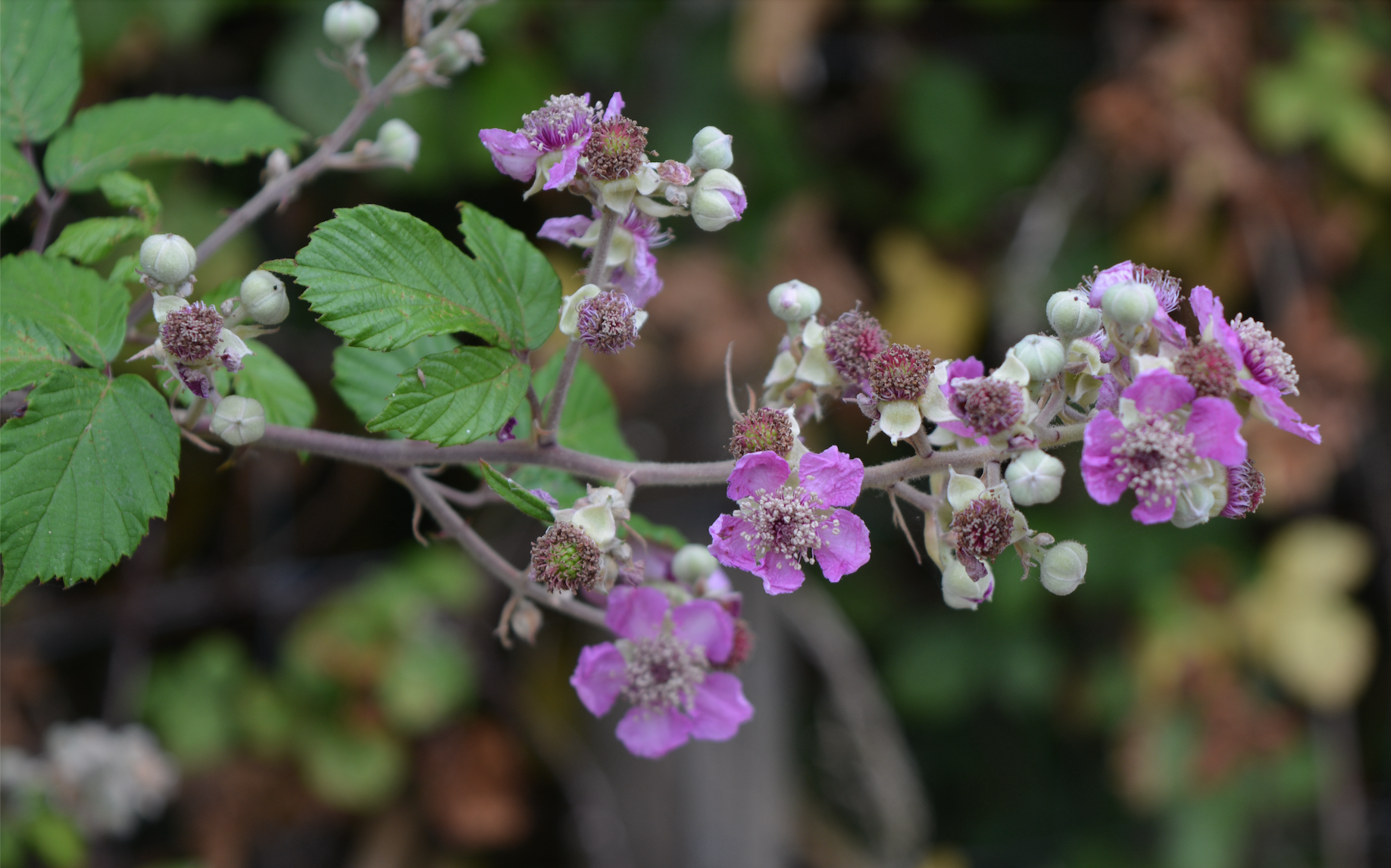
Bramble flowers can be white, pink or even magenta
My PhD research is on hedgerows and hedgerow plants: some of the more commonplace, familiar species we have here in the UK. This familiarity is for a good reason: evidence of hedges in this country date back to the Bronze Age and written records of planting hawthorn and bramble seeds for boundaries were documented by the Romans. I’m considering how these plants, many of which are so familiar we can almost overlook them, can contribute to wellbeing and place making. I think paying attention, taking the time to notice these common species, their intricacies, where they pop up, and how they change throughout the year, is a surefire way to feel more connected to the natural world.
While conducting interviews as part of my research, blackberry picking has been the most common activity and plant based memory that interviewees have shared. This is not surprising to me when I recall the sensory experience of this childhood activity: being at the right height to have fruits at eye level, avoiding the sharp thorns, the shocking sourness of an underripe berry and the delicious smell of whatever was cooked from the fruits of your labour – in my house, a blackberry and apple crumble.
Blackberries, or brambles, are often called a thug. They can create a dense thicket and be hard for gardeners or allotmenteers to deal with. But blackberries are a crucial part of the UK ecosystem; I’ve spoken to land managers who talk about how brambles can form a nursery for young plants, protecting the tender growth from browsing by deer or rabbits but giving enough light for the new trees to grow through what they are tall enough. Blackberries also have a plethora of traditional uses: like raspberries, the leaves make a medicinal tea, the stems can be turned into cordage and make excellent baskets, the berries can be used for fabric dyeing (as anyone who has taken a small child blackberry-picking can attest) and of course, jams, jellies, vinegar, wine and crumble can all be made and enjoyed from the fruit.
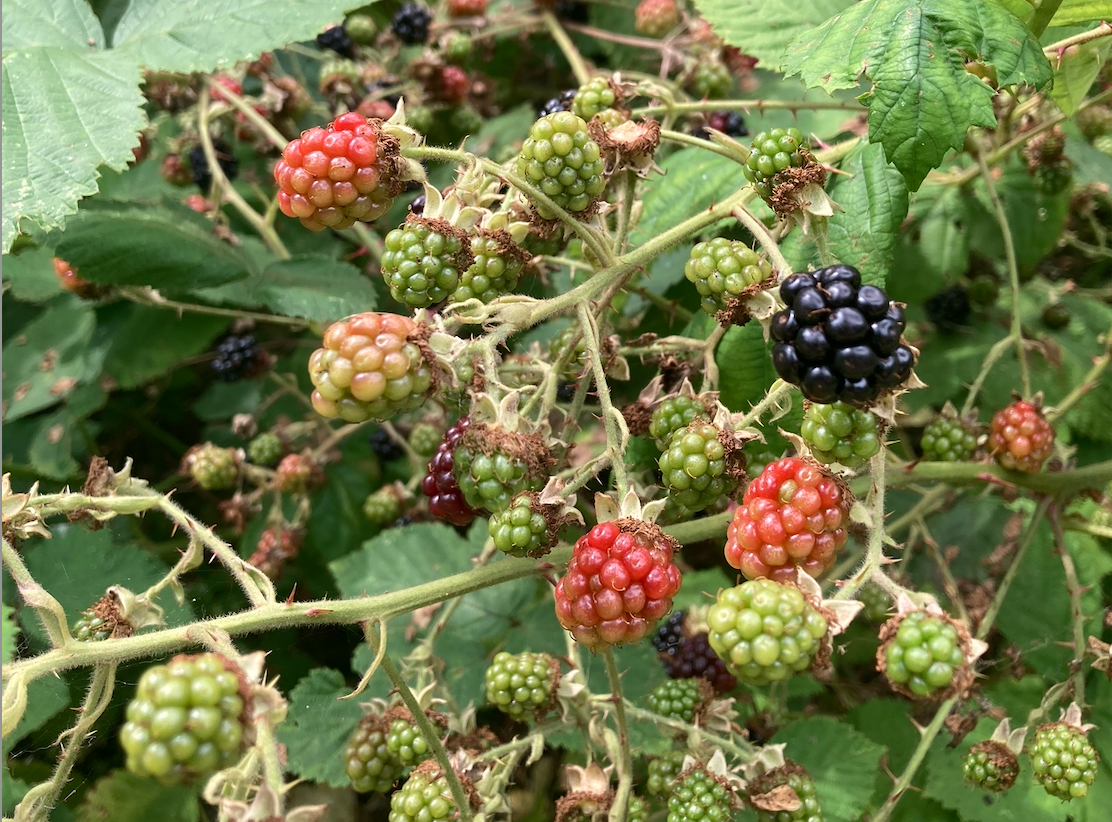
Jams, jellies, vinegar, wine and crumble can all be made and enjoyed from blackberries
There are thousands of varieties of blackberries in our hedgerows due to the crossing of species which has happened over millennia – in Essex, a Neolithic skeleton was excavated with blackberry seeds in its stomach. By blackberry picking you’re taking part in an activity which links you to the deep past.
Brambles have something to offer throughout the year if you are looking closely. In the summer the flowers can be anything from bright white to deep magenta, in the autumn there’s the fruits, and in the winter the foliage mixes green with scarlet. Watching a bramble bush can reveal tiny birds sheltering in its thorny protection or butterflies feeding on its flowers.
When I spoke to Encounter they shared that there were 52 tags of blackberries recorded on their app, making it one of the more common plants recorded. I think part of of the beauty of the blackberry is that it is so recognisable – it can’t be easily mistaken for another plant – and once you know the name of something you start to see it everywhere. Recording this data is important for my research as it demonstrates that the ‘ordinary’ species are not being overlooked and that the plants around us could form part of our sense of place.
Indigenous ecologist and author Robin Wall Kimmerer asks, “How will we fall in love with the world if we do not pick the berries?”. As a researcher, being able to use data from Encounter gives me hope that people will continue to record these commonplace encounters, look closely at the familiar, document the changes through the seasons, eat the fruits and appreciate the world on our doorsteps.
Anna Lewis is a PhD student working between Royal Holloway, University of London and Royal Botanic Gardens Kew on a project funded by SEDarc, part of the Economic and Social Science Research Council. Her work is on the ethnobotany of hedgerows, thinking about how hedgerow plants are used, why they are culturally important and how they can contribute to sense of place and wellbeing.